
Webinar highlights: EntryMapper, Kasvu Partners and Grants Funding on scaling SMEs internationally
EntryMapper joined Kasvu Partners and Grants Funding for a webinar focused on one of the biggest questions facing growth-minded SMEs.

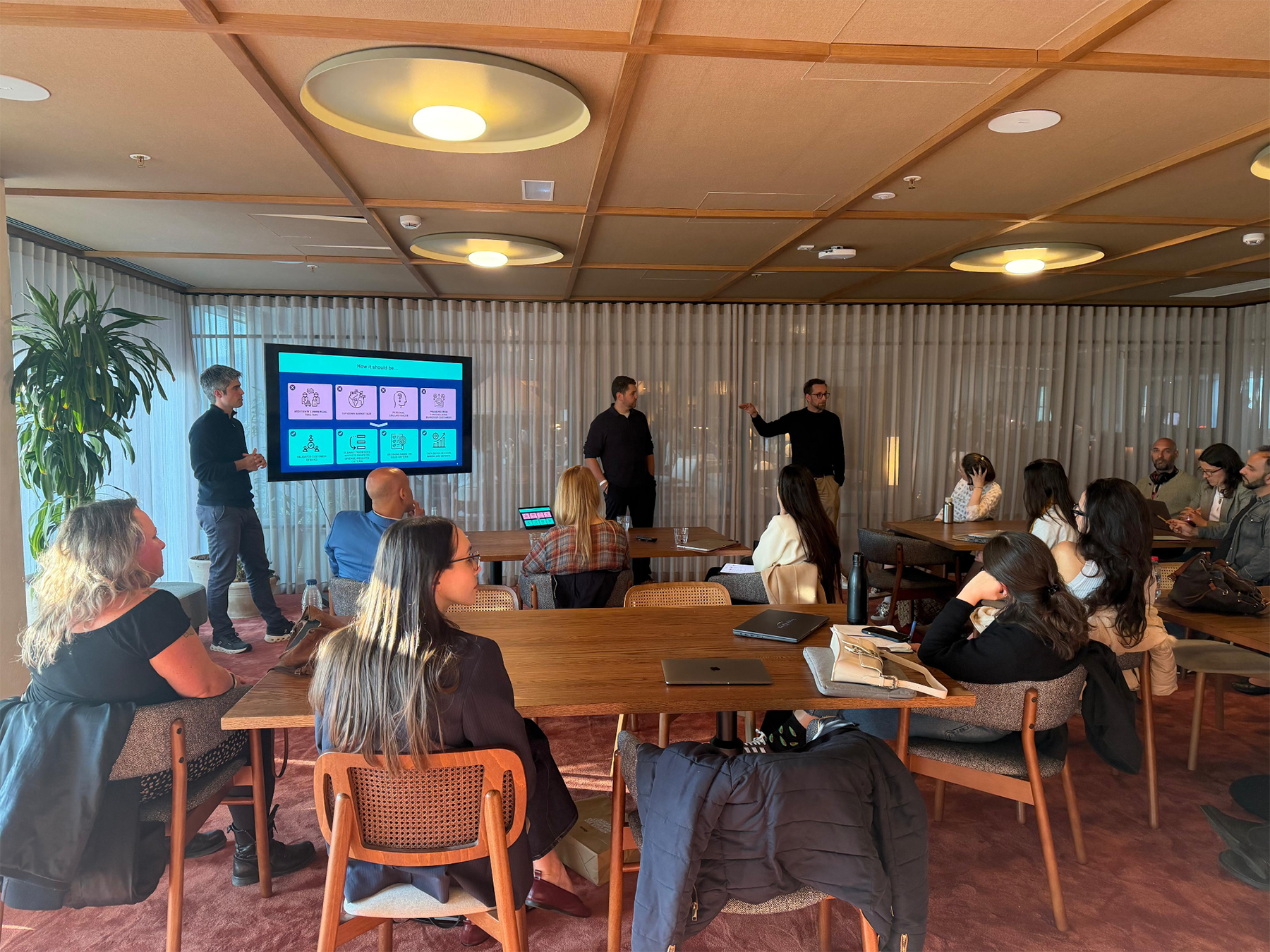
On March 26, EntryMapper joined Kasvu Partners and Grants Funding for a webinar focused on one of the biggest questions facing growth-minded SMEs:
How do you scale to international markets without turning expansion into a blind leap?
The webinar, “Scale Your SME to International Markets: Ensure the Right Market, Funding and a Winning Sales Strategy,” brought together three complementary perspectives on international growth.
- Pieter Swart, EntryMapper: market selection and go-to-market planning
- Miikka Liimatainen, Grants Funding: growth funding
- Timo Sorri, Kasvu Partners: sales strategy and management
The session was designed for SMEs that are ready to grow beyond their home market, but want a more structured way to decide where to go, how to fund the move, and how to build a sales strategy that can actually win internationally.
Why we hosted this webinar together
International expansion is rarely just one decision. It is a chain of connected decisions.
A company needs to choose the right market, understand the cost and risk of entering it, secure the resources to execute adequately, and build a sales model that fits the local customer reality.
That is why the webinar brought together three partners with different but connected areas of expertise.
EntryMapper focused on the first question: where should we expand? Grants Funding covered how companies can use public growth funding to reduce the risk of interationalisation. Kasvu Partners focused on how to plan and lead international sales once the market opportunity is clear.
Together, the session gave SMEs a practical framework for moving from international ambition to international readiness.
The problem: too many expansion decisions are still based on weak signals
For many SMEs, the first international market is chosen through a mix of intuition, network, and opportunity.
A potential customer appears in one country. A distributor shows interest in another. A board member suggests a familiar market. A competitor expands somewhere and suddenly that market feels urgent.
These signals can be useful, but they are not enough on their own.
A market can look attractive from the outside while still being difficult to enter in practice. The message of the webinar was simple: international growth should not be a guessing game.
EntryMapper’s session: choosing the right market with hard data
EntryMapper’s part of the webinar focused on market selection and go-to-market planning.
Before a company invests in local sales, marketing, partnerships, travel, hiring, or localisation, it needs to understand which markets deserve attention in the first place.
That means comparing potential markets against criteria that actually reflect the company’s growth strategy. Depending on the business, this can include:
- demand for the product or service
- customer segment fit
- market size and growth
- competitive intensity
- ease of market entry
- regulatory or certification requirements
- availability of partners and sales channels
- localisation needs
- cost and complexity of selling
- likelihood of reaching meaningful revenue within a realistic timeframe
A data-backed market selection process helps leadership teams move away from opinion-led debates and towards clearer, more defensible decisions. It also creates a stronger foundation for the next steps: funding, sales planning, partnerships, hiring, and execution.
Grants Funding’s session: reducing risk with public growth funding
Once the market opportunity is clearer, the next question is resources.
International expansion can require investment long before meaningful revenue arrives. SMEs may need to fund market research, travel, localisation, sales development, certifications, partner development, recruitment, and longer sales cycles.
Grants Funding’s part of the webinar focused on how companies can use public growth funding to reduce the risk of internationalisation.
For many Finnish SMEs, the right funding instruments can create room to test the market properly, build readiness, and execute the expansion plan with more confidence.
But funding works best when it is tied to a clear strategy. A company needs to show why the chosen market makes sense, what the funding will enable, and how progress will be measured.
This is where market selection and funding readiness reinforce each other. A strong, evidence-backed expansion plan can make the funding case more credible. The right funding can then help the company execute that plan without cutting corners.
Kasvu Partners’ session: building a winning international sales strategy
The final part of the webinar focused on sales strategy and management.
Choosing the right market and securing funding are important, but they do not automatically create revenue. International growth becomes real only when the company can build pipeline, close deals, manage partners, and lead a sales process that fits the new market.
Kasvu Partners focused on how SMEs can plan and lead international sales in practice.
Local buyers may have different expectations. Procurement may work differently. Trust may take longer to build. Channels that work in Finland may not work the same way elsewhere.
A winning international sales strategy should answer practical questions such as:
- Who exactly are we selling to in the new market?
- What is the most realistic route to market?
- Should we sell directly, through partners, or through distributors?
- What proof points do local buyers need?
- What kind of sales leadership and reporting will be required?
- What needs to be adapted from the domestic model?
- What should we validate before scaling the sales effort?
This is where expansion becomes operational. The goal is not just to enter a market, but to build a repeatable commercial motion inside it.
Key takeaway: market, funding and sales need to be planned together
The main takeaway from the webinar was that SME internationalisation works best when the core pieces are connected.
For SMEs preparing to scale internationally, the strongest expansion plans connect three questions:
- Which market should we enter, and why?
- How will we fund the expansion and reduce risk?
- How will we sell, manage, and grow in the new market?
When these questions are answered together, international expansion becomes more deliberate. The company can prioritise markets more confidently, fund the move more intelligently, and build a sales engine that is better suited to the opportunity ahead.
Considering international expansion? EntryMapper helps growth companies choose the right markets, identify customer and partner opportunities, and build data-backed go-to-market plans for their next stage of growth.
Frequently asked questions

The best market is not always the largest one. EntryMapper uses data-backed prioritisation across market size, growth, customer fit, competition, regulation and go-to-market feasibility to help companies identify where they have the strongest chance to win.
We support your go-to-market planning by providing the research and insights needed for a solid strategy. We identify your ideal customer segments in the new market, analyze how competitors reach those customers, and suggest effective sales and marketing channels for your situation. Our Expansion Playbook includes tailored recommendations on positioning, partnerships, and even a phased rollout plan. Essentially, we give you a data-backed blueprint so you can execute your GTM strategy with confidence.
EntryMapper works with startups, scaleups, larger companies and investors that need clarity before making expansion, investment or go-to-market decisions. We are especially relevant for teams considering new countries, new verticals, new customer segments, new partner routes or fundraising-related market positioning.
EntryMapper helps companies make better market-entry and go-to-market decisions through structured research, competitive analysis and data-backed recommendations. We help answer questions such as where to expand, which markets to prioritise, how the competitive landscape works, which customer segments to focus on, which partners matter, and what the first go-to-market steps should be.
You should work with EntryMapper before committing significant time, budget or team capacity to a new market. Typical moments include choosing between expansion markets, validating whether there is real white space, preparing for investor or board discussions, defining an ideal customer profile, or building a practical go-to-market plan.
Continue reading



Strategic clarity for market entry
We help companies, investors and advisory teams make expansion decisions with more clarity, stronger evidence and better execution readiness.

Book a 30-min market entry consultation
Choose a convenient time to speak with EntryMapper. We’ll discuss your expansion goals and recommend the next best steps.

30 minutes

Google Meet


.svg)